What a metal frame gives a room
A metal frame gives a chair its line: slim legs, a rigid back and a silhouette that lets a room seat more people without looking crowded. That slimness matters in restaurants and bars where floor space is money, because a chair that takes less visual room lets a table layout breathe even when every seat is taken. Metal also holds its shape under repeated use, which suits rooms where chairs are lifted, stacked and moved daily, and where a wooden leg might loosen and a plastic leg might flex over time.
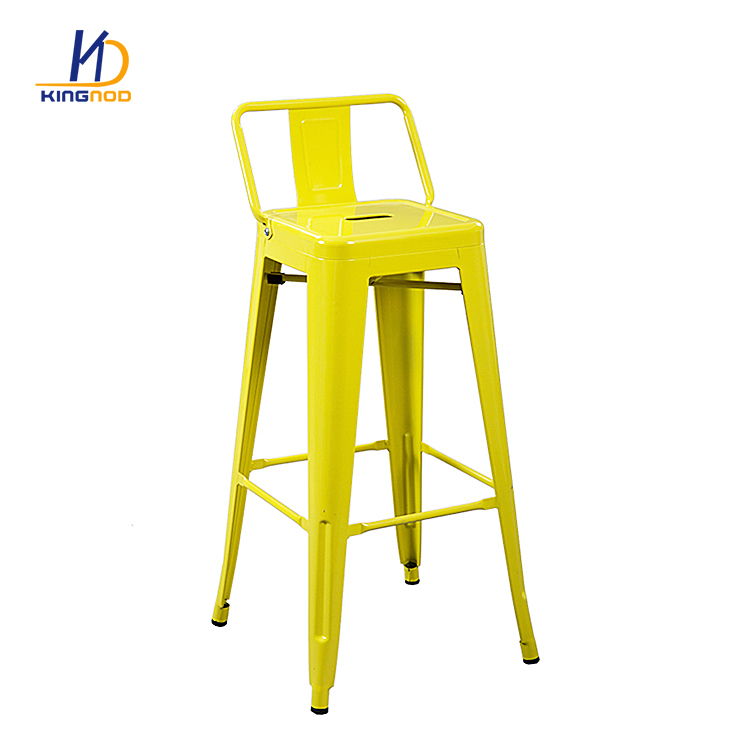
The red metal chair shown as a single product photograph illustrates the type well: a Tolix-style metal seat and frame that reads as both industrial and domestic, depending on the room it sits in. The yellow metal bar chair with a low back shows the same material working at counter height, where a metal frame tolerates spills and kicks that would mark other materials. Both pictures are single product photographs, not room sets, and this site captions them that way rather than inventing a setting the pictures do not show.
Metal seats, metal frames and mixed builds
Buyers should distinguish three different uses of metal in this catalogue: a full metal chair, a metal frame with a different seat, and a metal accent on an otherwise upholstered or plastic chair. A full metal chair suits the hardest-working rooms, since every surface wipes clean and every joint is metal, while a metal frame with a plastic or upholstered seat trades some of that hardness for comfort. The verified bar chair BC-892, listed as a bar chair with a plastic seat and metal legs, is a mixed build of exactly this kind, and its listing title is quoted word for word on its own page.
Mixed builds ask a buyer to judge two materials at once: the frame for rigidity and the seat for comfort and cleaning. A metal frame with a fabric seat suits a dining room that wants a slim look with a softer sit, while a metal frame with a plastic seat suits a restaurant that wants the same look with a wipe-clean surface. A buyer should name the seat material they want when asking about a metal chair, rather than assuming that every metal chair in the catalogue shares the same seat.
Care, noise and floors
Metal chairs ask for two kinds of care that other chairs do not: feet that protect the floor, and joints that stay tight under repeated movement. A metal leg on a hard floor can mark or scratch if its foot is worn, so a buyer should ask about foot glides and whether replacements can be ordered. Noise is the other side of the same coin, since a metal chair dragged across a tiled floor announces itself in a way a plastic chair does not, and a restaurant that values a quiet room should consider glides and floor type together.
Outdoor use is a natural question for metal chairs, because a metal frame left in rain or coastal air faces corrosion that an indoor chair never meets. The source pages do not give a corrosion rating for these lines, so a buyer ordering metal chairs for a terrace or a garden should ask whether their chosen model suits outdoor use and what finish protects it. The garden chairs page carries that question further, with the red metal chair shown as a single unit rather than as part of a set the picture does not show.
Ordering metal chairs for a commercial room
A metal chair inquiry should name the room, the seat count and the seat material wanted, since those answers decide whether a full metal chair or a mixed build suits the room. Colour belongs in the same message, because a metal frame can be finished in colours that change the whole look of a room, and the company supports customised colours, logos and designs. A buyer who wants a house colour on a metal frame should ask whether that colour is offered on their chosen model and whether a sample in that colour can be approved before mass production.
Quantities and spares deserve attention for metal chairs, because a commercial room that loses one chair needs a matching single, and a metal frame colour that differs between batches will show across a full room. Ask whether a model stays in production, whether single chairs can be ordered as spares, and whether replacement feet or glides can be supplied. Delivery timing, packing and any certificates for a specific model should be settled in the same inquiry, since a venue opening rarely waits for a second shipment.