The counter height problem, stated plainly
A bar stool is bought against a counter the buyer already owns, which makes it the most measurement-sensitive line on this site. A stool that is too tall traps a guest against the counter edge, while a stool that is too low leaves them reaching up for a drink and a conversation. This site prints no stool heights at all, because the source pages do not give a verified height table, and a guessed height would send buyers toward the wrong stool with false confidence. The bar stool height guide explains how to measure a counter and what to ask, and every height decision is settled in an inquiry against the buyer's own counter.
Adjustable stools soften the problem but do not remove it, because an adjustable stool still has a lowest and a highest position, and a buyer must know both before ordering. Swivel stools add a further question, since a stool that turns freely needs clearance from neighbouring stools and from the counter edge, while a fixed stool needs none. A buyer ordering a row of stools should therefore think in terms of spacing along the counter as well as height, and should send the counter height and the available length with the inquiry.
Metal, plastic and upholstery stools
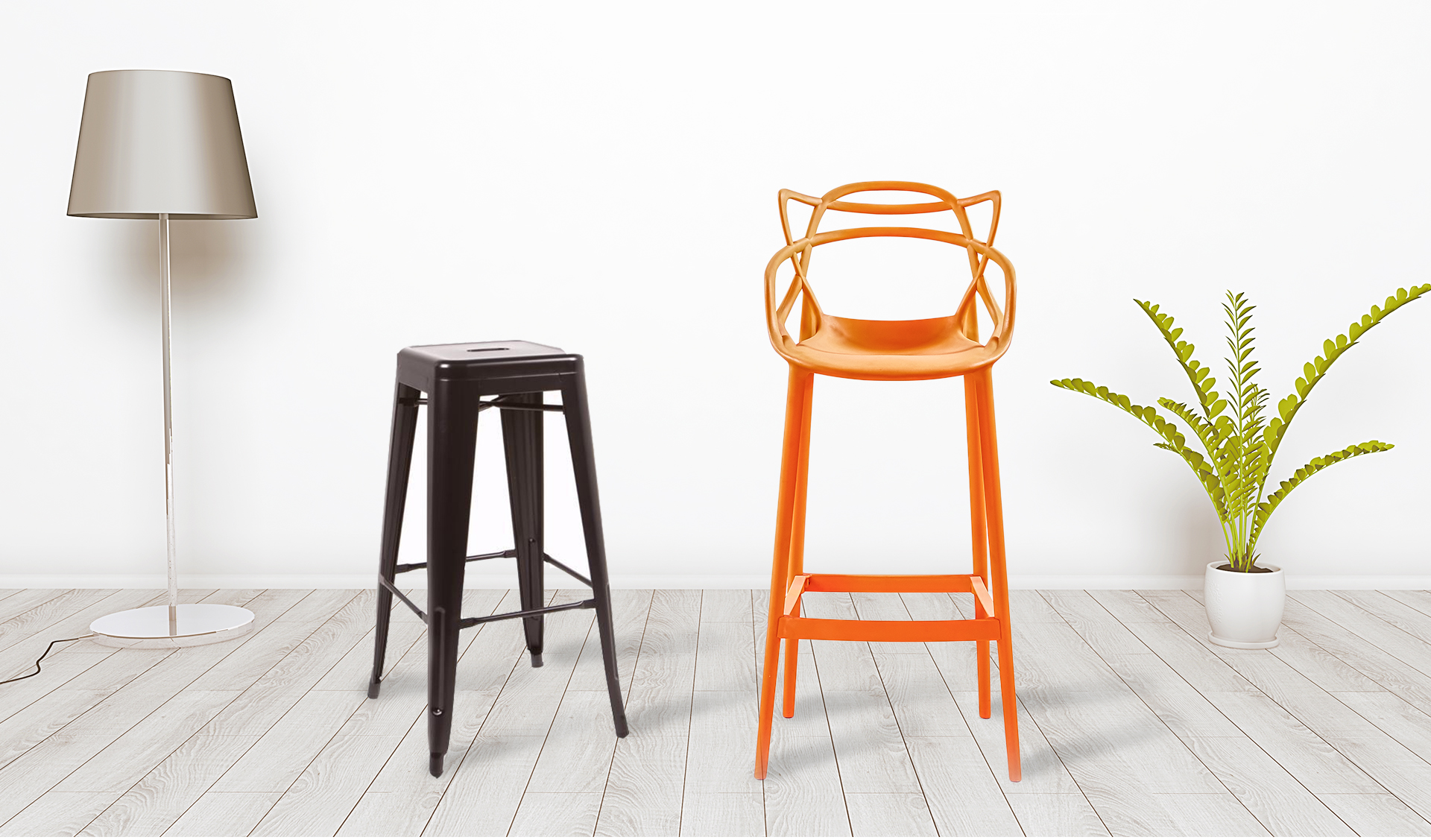
Metal bar stools suit busy bars because they tolerate spills, kicks and constant movement, and the yellow metal bar chair with a low back shown on this site illustrates the type: a bright, wipe-clean, single-unit stool that reads well in a bar photograph. Plastic stools suit the same rooms for the same reasons, with lighter weight and easier stacking, while upholstery stools suit quieter bars and lounges where a guest sits longer and comfort matters more than wipe-clean speed. The choice is rarely about looks alone, since a bar that serves food needs a stool that cleans like a restaurant chair, while a cocktail bar can afford a softer seat.
Backs change the stool as much as material does. A stool with a back supports a guest who stays for an evening, while a backless stool tucks fully under a counter and keeps a walkway clear when the bar is closed. The source FAQ names adjustable, swivel and fixed stools as types, and each type answers a different bar layout: adjustable for mixed counters, swivel for social bars where guests turn to talk, fixed for rows where every stool must stay aligned. A buyer should name their bar layout when asking about a type, not just the type itself.
Rows, spacing and the working bar
A bar is a workplace as well as a seating area, and stool spacing decides whether staff can pass, serve and clear without asking guests to move. A row of stools set too tightly forces guests to stand whenever a neighbour leaves, while a row set too loosely wastes covers on a busy night. Buyers should measure the counter length, decide how many covers they want, and ask the company whether their chosen stool suits that spacing, rather than ordering a round number of stools and discovering the fit on delivery day.
Foot space is the detail most often forgotten in a bar stool order. A stool without a footrest leaves guests searching for a place to put their feet, while a stool with a footrest needs the rest set at a height that suits the counter. The source pages do not give footrest dimensions, so this site does not invent them; instead, the inquiry should ask about footrest provision for the chosen model and about whether the footrest suits the buyer's counter height. A sample stool, tried at the actual counter, answers all of these questions faster than any catalogue page.
Ordering bar stools for a bar or a kitchen counter
A bar stool inquiry should start with the counter height, the counter length and the number of covers wanted, in that order, because those three figures decide the stool type before any discussion of colour or material. Material and back style come next, followed by colour and any logo or design customisation the buyer wants. A buyer ordering for a home kitchen counter follows the same sequence, since a home counter is just as unforgiving about height as a commercial bar, even though the order size is smaller.
Samples are especially valuable for bar stools, because a stool that looks right in a photograph can still fail at the buyer's own counter. Ask for a sample of the exact model, place it at the counter, sit on it for a full drink, and check the height, the footrest and the clearance to neighbouring stools before approving a larger order. Delivery timing and packing should be settled in the same inquiry, since a bar opening or a kitchen refit often has a fixed date that production must meet.