The table as the room's fixed point
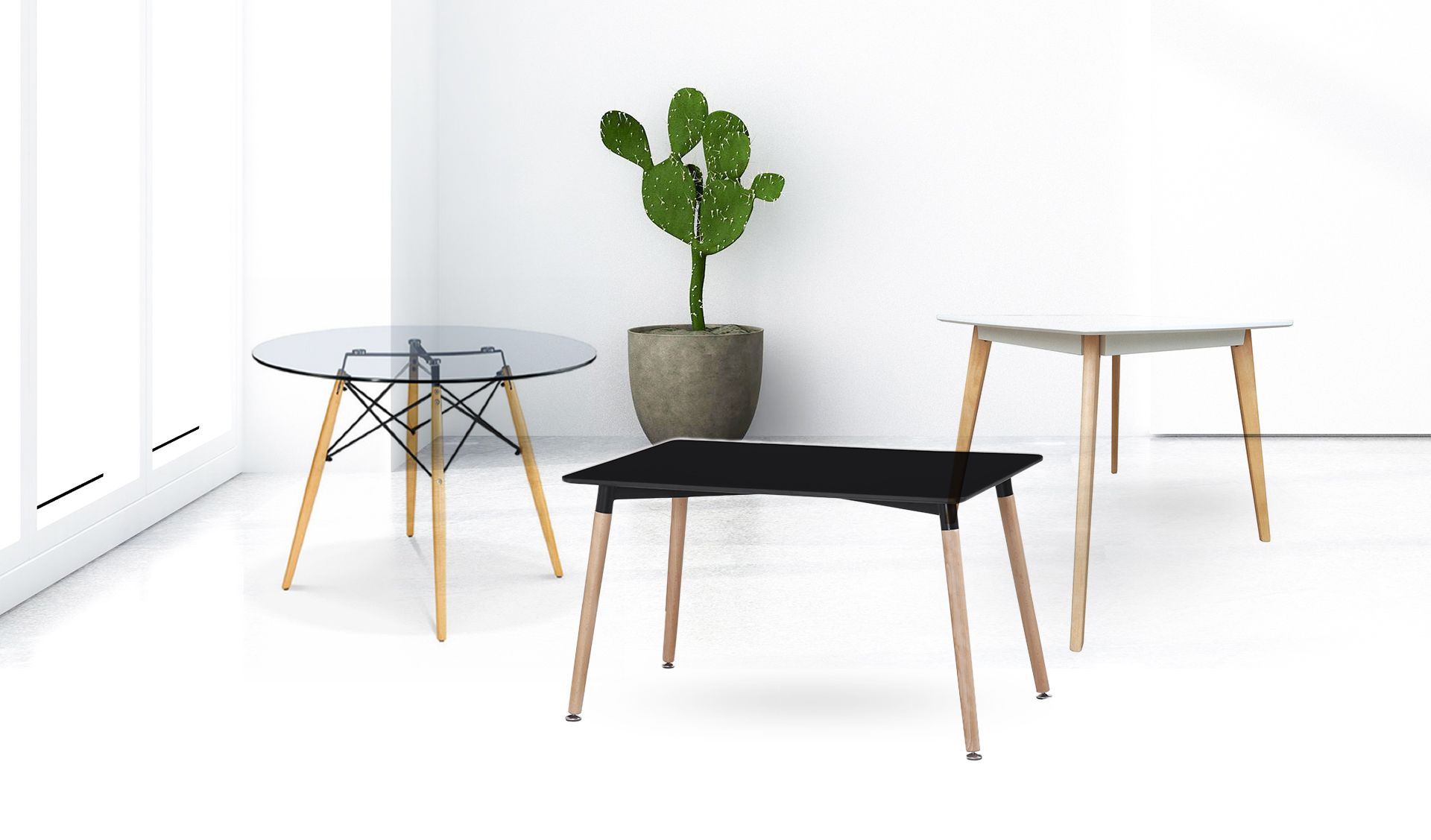
Chairs move, tables stay, and that asymmetry shapes every dining table decision: a buyer chooses a table for a room that may host different chairs, different linens and different occasions over its life. A round glass table suits a room where conversation matters, since every diner can see every other diner, while a rectangular table suits a room that seats in rows or extends for larger parties. The display picture on this page shows three tables in one bright indoor scene, a round glass table, a black rectangular table and a white rectangular table, and it is captioned as a product display rather than as a room the company furnished.
Glass and MDF dominate the dining table lines in the source FAQ, and each brings a different room logic. Glass opens a small room visually, letting light through and showing the floor beneath, but it shows every mark and asks for regular cleaning. MDF gives a consistent, paintable surface that suits modern dining rooms and holds a clean line across many units, while wood appears as legs and accents that warm a table's appearance. A buyer should weigh cleaning against appearance honestly, since a glass table in a busy restaurant and a glass table in a quiet home are different commitments.
Shapes, covers and the meal itself
Table shape decides covers more directly than any other single factor: a round table seats fewer people comfortably than a rectangular table of the same footprint, but it serves conversation better, while a rectangular table seats more and extends more easily. An extendable table, named in the source FAQ as a type, answers the buyer who hosts small dinners most nights and large gatherings occasionally, though its extension mechanism and stored leaves deserve questions in an inquiry. A buyer who names their usual party size and their largest party size will get a sharper table recommendation than a buyer who names a shape alone.
The verified model CT-1035, a round MDF metal table listed as a side coffee table, shows how one table can cross categories: its product name places it among round tables, while its listing title describes a living room coffee table. This site presents it on its own page with both wordings quoted, rather than forcing it into a single category, because the source page itself straddles the two. Buyers who want a dining table proper should look at the dining table category lines, while buyers who want a smaller living room table should ask about CT-1035 by its exact listing words.
Matching tables to chairs
A dining table and its chairs must agree on height, leg clearance and style, and the most common failure is a beautiful table paired with chairs that cannot tuck beneath it. Leg placement decides tucking: a pedestal base lets chairs slide in from every side, while four corner legs leave less room for chairs at the ends. Apron depth decides legroom, since a deep apron under a tabletop can press against a tall diner's knees. This site prints no table heights or apron depths, because the source pages do not verify them, so every matching question goes back to an inquiry where the buyer can name their chair and ask about the table that suits it.
Style matching is softer but no less real: a glass table pairs naturally with slim metal or transparent-accent chairs, while an MDF table pairs with chairs that share its clean, painted lines. A buyer furnishing a whole dining room should consider ordering table and chairs together, so the finishes can be matched in one production batch rather than across two batches that may differ slightly. The restaurant furniture page develops that whole-room logic for buyers furnishing a restaurant rather than a single home.
Ordering a dining table without regret
A dining table inquiry should name the room, the usual party size, the largest party size and the table shape wanted, since those four answers narrow the line faster than any style word. Material comes next: glass for light and openness, MDF for a consistent modern surface, wood accents for warmth, with the understanding that each material asks a different cleaning routine. Colour and design customisation can be raised in the same message, since the company supports customised colours, logos and designs, though a logo rarely belongs on a dining table and a buyer should say where any marking would sit.
Delivery and assembly questions belong in the first inquiry too, because a dining table is larger, heavier and harder to return than a chair. Ask how the table ships, whether it arrives assembled or flat-packed, what protection covers the tabletop in transit, and what happens if the top arrives marked. A sample is rarely practical for a full table, so a buyer should ask for detailed pictures of the exact model and finish, and for the production and loading reports the product pages list, before approving production.