Why banquet seating is a fleet decision
A banquet chair is rarely bought singly, which changes every decision about it: a hall that seats three hundred needs three hundred matching chairs, plus spares, plus storage, plus a way to move them between a store room and a function room without scratching the finish. Matching matters more than individual beauty, because one chair in a different shade breaks the line a photographer captures from the back of the room. Stacking matters just as much, because a hall that hosts a wedding on Saturday and a conference on Monday must clear and reset its floor between events, and chairs that stack cleanly make that reset possible with a small team.
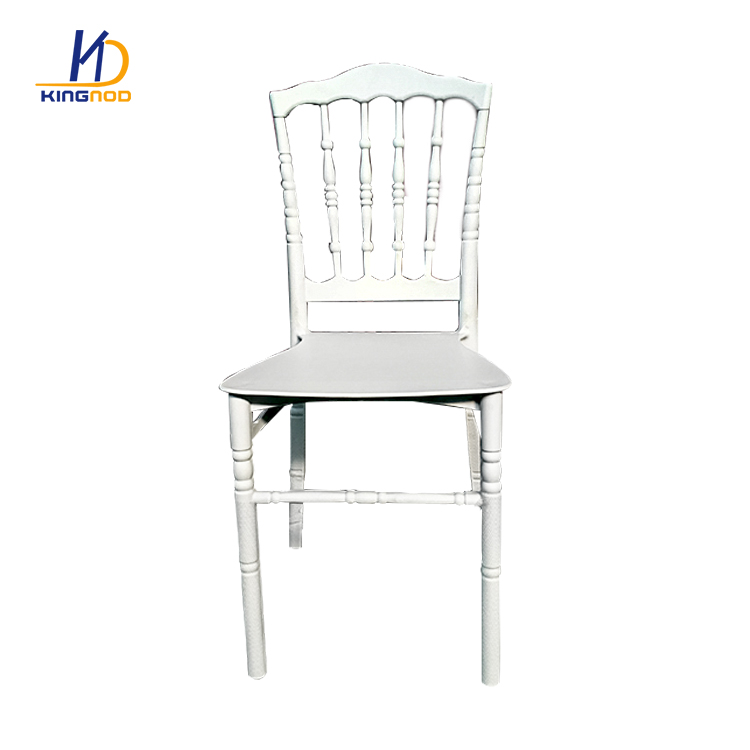
The white plastic banquet chair shown on this page illustrates the fleet logic well: a single, clean, repeatable unit that reads as formal in a photograph and survives repeated handling. The red upholstered banquet chair with a gold-coloured frame shows the other end of the same decision, where a softer seat and a decorative frame suit weddings and celebrations that want a warmer look. Both belong to the banquet family, and a buyer choosing between them should weigh the room, the event type and the cleaning routine rather than picking the prettier photograph.
Weddings, conferences and private hire
Wedding buyers want chairs that photograph beautifully and feel special for a long celebration, which pushes them toward upholstered seats, Chiavari-style frames and decorative finishes. Conference buyers want the opposite virtues: chairs that line up evenly, sit comfortably for a full day of sessions and stack away when the room becomes an exhibition floor. Private hire companies sit between the two, ordering chairs that can serve a wedding one weekend and a corporate dinner the next, which makes neutral colours and durable finishes more valuable than any single decorative flourish.
Rental fleets add a further test that private buyers never face: a chair that leaves the warehouse on Friday, serves a marquee on Saturday and returns on Sunday must survive transport, outdoor ground and handling by different crews. A rental buyer should ask about frame strength, seat cleanability and spare availability before ordering, and should treat the first order as a trial of a small batch rather than a fleet commitment. The event chair rental guide in the blog section of this site develops that trial logic further for rental buyers.
Chiavari-style chairs and their place in a hall
Chiavari chairs appear in the source FAQ as a distinct type, and the product pictures show gold and white Chiavari chairs with light seat pads arranged for events. Their appeal is visual lightness: a slim frame that lets a dressed table and its centrepiece dominate the photograph, while still giving each guest a proper seat. Their cost is care: a light frame and a light pad ask for gentler handling and more careful storage than a solid plastic banquet chair, and a buyer who orders them for a high-turnover hall should weigh that care against the look.
A buyer comparing Chiavari-style chairs with standard banquet chairs should compare them in the same room, not in separate photographs, because the difference is proportion as much as style. Chiavari chairs suit rooms where the table dressing carries the theme, while fuller upholstered banquet chairs suit rooms where the chair itself is part of the decoration. The comparison page on Chiavari versus banquet chairs sets out that choice in more detail, with the same caution about handling and storage that applies here.
Ordering banquet chairs for a hall
A banquet inquiry should open with the hall capacity and the event mix, since a hall that seats two hundred for weddings and three hundred for conferences may need two chair counts or one flexible count with spares. Colour comes next, because a hall that dresses tables in different themes needs a chair colour that works under several linen colours, not just one. Stacking and storage should be named explicitly: ask how the chairs stack, how much floor area a stack occupies and whether the finish survives repeated stacking without marking.
Delivery timing for a banquet order often ties to a venue opening or a first event date, so the inquiry should name that date and ask whether production and delivery can meet it, including any sample step. Mixed orders deserve a line too, since a hall may need banquet chairs, banquet tables and a small number of different chairs for a head table or a lounge corner, and asking whether those lines can ship together saves a second freight bill. Certificates for a specific model, where a venue or a tender requires them, should be requested by model.